
Every year, around 142 workers are killed and over 600,000 are injured in British workplaces. Many of those incidents happen in environments where trained first aiders were absent, or where fire safety protocols had not been properly communicated to staff. First aid and health and safety training is not a box-ticking exercise it is the difference between a controlled response and a crisis.
Whether you are an employer meeting your legal obligations, a team leader taking on responsibility for workplace safety, or an individual building skills that travel with you across every job you take, the right certification matters.
What Is Emergency First Aid at Work and Who Needs It?
Emergency First Aid at Work (EFAW) is a one-day regulated qualification that trains individuals to provide first aid in the event of a workplace accident or medical emergency. It is designed for lower-risk workplaces offices, retail environments, schools, and similar settings where a full First Aid at Work (FAW) qualification is not required but basic first aid provision must still be in place.
Under the Health and Safety (First Aid) Regulations 1981, every UK employer has a legal duty to ensure that adequate and appropriate first aid equipment, facilities, and trained personnel are available. The Health and Safety Executive (HSE) provides clear guidance on how many first aiders a business needs based on workforce size and risk level which you can review directly on the HSE first aid at work guidance page.
For many organisations, a trained EFAW first aider on each shift is the minimum acceptable provision. For higher-risk industries such as construction, manufacturing, and logistics, a full three-day First Aid at Work qualification is typically expected.
First Aid Training Course: What the Qualification Covers
A quality first aid training course covers far more than CPR. The EFAW qualification taught through accredited providers covers a structured range of emergency response skills, all designed to help learners act confidently and effectively when seconds matter.
Core topics covered in an Emergency First Aid at Work certification programme include:
- The role and responsibilities of a first aider
- Assessing an incident and ensuring scene safety
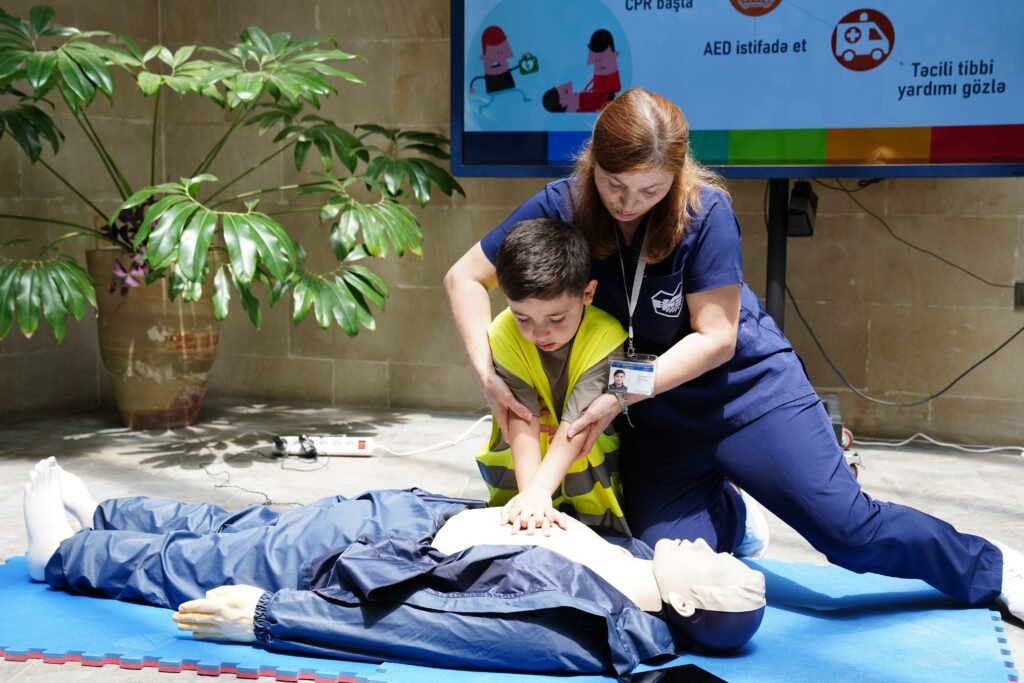
- Managing an unresponsive casualty and performing CPR
- Using an automated external defibrillator (AED)
- Treating choking in adults and children
- Recognising and responding to shock
- Managing wounds, bleeding, and burns
- Treating fractures and spinal injuries
- Responding to seizures and diabetic emergencies
- Anaphylaxis awareness and use of an adrenaline auto-injector
Each of these topics is covered with practical context so that learners understand not just what to do, but how to stay calm and apply skills under pressure.
The qualification is valid for three years from the date of certification. After that, a renewal or refresher course is required to maintain legal compliance in the workplace. Younique Talent can send automatic renewal reminders so your team never lapses.
Workplace First Aid Certification: Understanding Your Legal Obligations
Employers who assume that workplace accidents are rare or that first aid provision can be informal are taking a risk that the law does not allow. The Health and Safety Executive can investigate businesses that fail to maintain adequate first aid arrangements, and enforcement action including improvement notices and fines is a real consequence of non-compliance.
The HSE’s employer guide to first aid outlines four things every employer must do:
- Conduct a first aid needs assessment to determine the appropriate level of provision
- Ensure adequate and trained first aiders are available during all working hours
- Maintain a stocked and accessible first aid kit
- Inform all employees of the first aid arrangements in place
Workplace first aid certification through an accredited provider gives employers the documented evidence they need to demonstrate compliance. This is particularly important during CQC inspections for care providers, Ofsted visits for schools and alternative provision settings, and general employer liability insurance claims.
At Younique Talent, our workplace first aid certification courses are CPD-recognised and backed by structured assessment, so the certificate your team receives carries genuine currency with auditors, inspectors, and insurers.
First Aid and Health and Safety: How They Work Together
First aid does not exist in isolation. It sits within a broader health and safety framework that every UK employer is legally required to maintain. Treating these as separate obligations leads to gaps a trained first aider in an environment where fire risks have not been assessed, or a documented fire evacuation plan in a workplace where nobody has been trained as a fire marshal.
The most effective approach treats first aid training, fire safety training, and health and safety awareness as interconnected elements of the same compliance system.
| Training Area | Legal Basis | Who Needs It | Renewal Period |
| Emergency First Aid at Work | Health and Safety (First Aid) Regulations 1981 | Nominated first aiders in all workplaces | Every 3 years |
| Fire Safety Training | Regulatory Reform (Fire Safety) Order 2005 | All employees in premises open to the public or with staff present | Annually recommended |
| Fire Marshal Training | Regulatory Reform (Fire Safety) Order 2005 | Designated fire marshals and wardens | Every 1 to 3 years |
| Health and Safety Induction | Health and Safety at Work Act 1974 | All employees at point of hire | On employment, updated as required |
| Manual Handling | Manual Handling Operations Regulations 1992 | Staff who lift, carry, or move objects as part of their role | Every 3 years recommended |
Building a staff training schedule that covers all five areas ensures your business meets the requirements of the relevant legislation and can evidence compliance at any point.
Fire Safety Training: What Businesses Are Required to Provide
Fire safety training is a legal requirement for virtually every UK business that employs staff or invites members of the public onto its premises. The Regulatory Reform (Fire Safety) Order 2005 places clear duties on the responsible person in any non-domestic premises to:
- Conduct and record a fire risk assessment
- Put in place and maintain fire safety measures
- Plan for an emergency and document an evacuation procedure
- Provide fire safety instruction and training to all employees
The law does not specify exactly how fire safety training must be delivered but it does require that it is adequate, relevant to the premises, and repeated whenever the risk profile changes. The National Fire Chiefs Council (NFCC) and the Home Office both recommend fire safety training for all staff at induction and at regular intervals thereafter.
Online fire safety training is a practical and cost-effective way for employers to meet this obligation, particularly for businesses with dispersed or shift-based teams where classroom training is difficult to schedule consistently.
What Does Fire Safety Training Cover?
A comprehensive fire safety training course covers the knowledge employees need to act safely and decisively in the event of a fire:
- Common causes of workplace fires and how to prevent them
- Understanding fire risk assessments and what they mean for day-to-day behaviour
- Types of fire extinguisher and when each is appropriate to use
- Fire alarm systems and how to respond when one activates
- Evacuation routes, assembly points, and the role of each person in an evacuation
- How to assist colleagues or service users with mobility difficulties during evacuation
- What to do if you discover a fire or suspect a fire risk
Younique Talent’s fire safety training course is delivered entirely online with CPD recognition, structured assessments, and a certificate that employers can use to evidence compliance.
Fire Marshal Training: Beyond Basic Awareness
Fire safety awareness tells every employee what to do in a fire. Fire marshal training goes further it equips designated individuals to take an active role in managing evacuation, coordinating with emergency services, and helping their employer maintain ongoing fire safety compliance.
Under the Regulatory Reform (Fire Safety) Order 2005, every business is required to appoint a sufficient number of competent persons to assist in implementing fire safety arrangements. In practice, this means having trained fire marshals or fire wardens in place.
The number of fire marshals a business needs depends on the size of the premises, the number of floors, the nature of the work, and the number of people present at any given time. As a general guide, the Fire Industry Association recommends one fire marshal for every 20 to 50 employees, with adjustments made for higher-risk or multi-floor environments.
What Does Fire Marshal Training Cover?
Fire marshal training builds on basic fire safety awareness and adds the specific knowledge and skills needed to act as a designated safety lead:
- Legal responsibilities of a fire marshal under the 2005 Order
- How to conduct a fire risk assessment and identify emerging hazards
- Fire marshal responsibilities before, during, and after an evacuation
- Practical use of fire extinguishers and suppression equipment
- Dealing with staff and visitors who refuse to evacuate
- Coordinating with fire brigade officers on arrival
- Recording and reporting post-incident
Fire marshal qualifications are typically valid for one to three years. Many employers schedule annual refresher training to maintain confidence levels and ensure marshals are familiar with any changes to the premises or evacuation routes.
Choosing the Right First Aid and Health and Safety Provider
Not all training providers are equal. When selecting a provider for emergency first aid at work, fire safety training, or fire marshal training, employers should look for the following:
Accreditation: Courses should be CPD-recognised at a minimum. For regulated qualifications such as EFAW, the provider should be approved by an Ofqual-regulated awarding body.
Certificate recognition: Check that the certificate issued is accepted by your insurer, by the HSE, and by any relevant regulatory body (CQC, Ofsted, or sector-specific bodies).
Flexible delivery: Online training is the most practical option for most businesses. Confirm that the online format includes structured assessment not just passive video watching and that a certificate is issued upon successful completion.
Renewal reminders: Lapsing on first aid or fire safety certification creates instant legal exposure. A good provider tracks your team’s renewal dates and alerts you before certificates expire.
Staff record keeping: Larger employers benefit from a provider that can manage training records across multiple staff members, reducing the administrative burden on HR teams.
Younique Talent meets all of these criteria. Our first aid and health and safety courses are CPD-recognised, flexibly delivered online, and backed by a team that supports employers through compliance, renewal, and workforce training planning.
First Aid and Health and Safety Courses: Frequently Asked Questions
Is emergency first aid at work a legal requirement?
Yes, indirectly. The Health and Safety (First Aid) Regulations 1981 require all employers to make adequate first aid provision. For most workplaces, this means having at least one person trained to EFAW standard on site during working hours. The specific requirement varies based on workforce size and risk level the HSE first aid needs assessment tool helps employers determine what is needed.
How long is a workplace first aid certification valid?
An Emergency First Aid at Work (EFAW) certificate is valid for three years. A full First Aid at Work (FAW) certificate is also valid for three years. After this period, a renewal course must be completed to maintain legal compliance and employer liability coverage.
Can fire safety training be completed online?
Yes. Online fire safety training is a legally acceptable method of delivery in the UK. The training must be appropriate to the workplace risk level, adequately cover the required topics, and result in a certificate or documented record. Younique Talent’s online fire safety training meets all of these requirements and is CPD-recognised.
How many fire marshals does a business need?
There is no fixed number set by law, but the guidance is that enough competent people must be appointed to assist with fire safety arrangements. As a general rule, one fire marshal for every 20 to 50 staff is recommended, with more required for multi-floor buildings or higher-risk premises. The responsible person (usually the employer or building manager) determines the appropriate number through the fire risk assessment process.
What is the difference between fire safety training and fire marshal training?
Fire safety training is required for all employees and covers general awareness what to do in the event of a fire, how to evacuate, and how to use extinguishers if appropriate. Fire marshal training is a more advanced qualification for designated individuals who take on a specific role in managing evacuations and maintaining fire safety procedures. Both are legal requirements under the Regulatory Reform (Fire Safety) Order 2005.
Can employers claim back the cost of first aid training?
There is no specific government grant for first aid training, but employer costs are generally tax-deductible as a business expense. Some funded training routes, including Skills Bootcamps and local authority employer support schemes, may cover health and safety training costs for eligible businesses.
Your Team Deserves to Be Ready
A workplace incident does not announce itself. The businesses best placed to protect their staff and service users are the ones that invest in training before an emergency happens not after.
Younique Talent’s first aid and health and safety courses give your team the skills, confidence, and certification to respond effectively. From emergency first aid at work to fire marshal training, every course is delivered flexibly online, CPD-recognised, and designed to meet the real demands of modern working environments.